Friday, April 15, 2011

And the Pursuit of Happiness by Maira Kalman


Find details here.

"All I can say is Hallelujah.... For Jefferson, in the Declaration of Independence, changing the words Life, Liberty and the Pursuit of Property to the Pursuit of Happiness."

"Lincoln was always scribbling notes and putting them into his hat. With his hat on, he was seven feet tall."

"Everyone is beautiful. Everyone makes you proud. Everyone breaks your heart."

"[Jefferson's] friend, the Polish Freedom Fighter Tadeusz Kosciuszko, left money in his will to be given to Jefferson to free and educate his slaves. But the task was overwhelming and he did not get it done."

"The object of walking is to relax the mind. You should therefore not permit yourself even to think while you walk, but divert yourself by the objects surrounding you. Walking is the best possible exercise. - Jefferson"

"History makes you hungry."

"THINK SMALL is my new motto. It helps me handle the complicated too-muchedness of it all."

"[Benjamin Franklin] believed in doing good everyday. He made charts and had daily goals. The morning question: What good shall I do this day? Evening question: What good have I done today?"


5-8am / Rise, wash, and address Powerful Goodness; contrive day's business and take the resolution of the day; prosecute the present study; and breakfast.
8am-12pm / Work.
12-2pm / Read or overlook my accounts, and dine.
2-6pm / Work.
6-10pm / Put things in their places, supper, music, or diversion, or conversation; examination of the day.
10pm-5am / Sleep."

"He aspired to be a gentleman and, when he was still a teenager, wrote "George Washington's Rules of Civility and Decent Behavior in Company and Conversation."

Wednesday, April 6, 2011

Let Your Life Speak: Listening for the Voice of Vocation by Parker J. Palmer


Find details here.

"Ask me whether what I have done is my life."

"... the life I am living is not the same as the life that wants to live in me... I sometimes catch a glimpse of my true life, a life hidden like the river beneath the ice."

"Before you tell your life what you intend to do with it, listen for what it intends to do with you. Before you tell your life what truths and values you have decided to live up to, let your life tell you what truths you embody, what values you represent."

"Vocation does not come from willfulness. It comes from listening."

"The word vocation itself is rooted in the Latin word for voice. Vocation does not mean a goal I pursue. It means a calling that I hear."

"An inevitable though often ignored dimension of the quest for 'wholeness' is that we must embrace what we dislike or find shameful about ourselves as well as what we are confident and proud of."

"The soul speaks its truth only under quiet, inviting, and trustworthy conditions. The soul is like a wild animal - tough, resilient, savvy, self-sufficient, and yet exceedingly shy. If we want to see a wild animal, the last thing we should do is go crashing through the woods, shouting for the creature to come out. But if we are willing to walk quietly into the woods ..."

"True vocation joins self and service, as Frederick Buechner asserts when he defines vocation as 'the place where your deep gladness meets the world's deep need.'"

"Quaker teacher Douglas Steere was fond of saying that the ancient human question 'Who am I' leads inevitably to the equally important question 'Whose am I?' - for there is no selfhood outside of relationship."

"Teaching, I was coming to understand, is my native way of being in the world. Make me a cleric, or a CEO or a poet or a politician and teaching is what I will do. Teaching is at the he

"We must withdraw the negative projections we make on people and situations - projections that serve mainly to mask our fears about ourselves - and acknowledge and embrace our own liabilities and limits."

"self-care is never a selfish act"

"Had I not followed my despair... I might have continued to pursue a work that was not mine to do, causing further harm to myself, to the people and projects with which I worked, and to a profession that is well worth doing - by those who are called to do it."

"no punishment anyone might inflict on them could possible worse than the punishment they inflict on themselves by conspiring in their own diminishment."

"A clearness committee -- a process in which the group refrains from giving you advice but spends three hours asking you honest, open questions to help you discover your own inner truth."

"By then it was obvious, even to me, that my desire to be president had much more to do with my ego than with the ecology of my life - so obvious that when the clearness committee ended, I called the school and withdrew my name from consideration. Had I taken the job, it would have been very bad for me and a disaster for the school."

"Dorothy Day -- Do not give to the poor expecting to get their gratitude so that you can feel good about yourself. If you do, your giving will be thin and short-lived, and that is not what the poor need; it will only impoverish them further. Give only if you have something you must give; give only if you are someone for whom giving is its own reward."

"One sign that I am violating with my own nature in the same of nobility is a condition called burnout. Though usually regarded as the result of trying to give too much, burnout in my experience results from trying to give what I do not possess. [Burnout] does not result from giving all I have: it merely reveals the nothingness from which I was trying to give in the first place."

"Depression is the ultimate state of disconnection."

"'You seem to look upon depression as the hand of an enemy trying to crush you... do you think you could see it instead as the hand of a friend, pressing you down to the ground on which it is safe to stand?'"

"The problem with living at the high altitude is simple: when we slip, as we always do, we have a long, long way to fall... I had been trained as an intellectual not only to think - an activity I greatly value - but also to live largely in my head, the place in the human body that is farther from the ground."

"There were the visitor's who began by saying, 'I know exactly how you feel...' Whatever comfort or counsel these people may have intended to speak, I heard nothing beyond their opening words, because I knew they were peddling a falsehood: no one can fully experience another person's mystery. Paradoxically, it was my friends' empathetic attempt to identify with me that made me feel even more isolated."

"One of the hardest things we must do sometimes is to be present to another person's pain without trying to fix it, to simply stand respectfully at the edge of that person's mystery and misery. Standing there, we feel useless and powerless.. In an effort to avoid those feelings, I give advice, which sets me, not you, free.

"Why must we go in and down? Because as we do so, we will meet the darkness that we carry within ourselves - the ultimate source of the shadows that we project onto other people. If we do not understand that the enemy is within, we will find a thousand ways of making someone 'out there' into the enemy, becoming leaders who oppress rather than liberate others."

"Good leadership comes from people who have penetrated their own inner darkness and arrived at the place where we are at one with one another, people who can lead the rest of us to a place of 'hidden wholeness' because they have been there and know the way."

"Emerge with the capacity to lead the rest of us toward community, toward our complex and inexplicable caring for each other."

"If you can't get out of it, get into it!"

"The average group can tolerate no more than fifteen seconds of silence: if we are not making noise, we believe nothing good is happening and something must be dying."

"The great community asks us to do only what we are able and trust the rest to other hands."

"The best leaders in every setting reward people for taking worthwhile risks even if they are likely to fail. These leaders know that the death of an initiative - if it was tested for good reasons - is always a source of new learning."

"By allowing something to die when its time is due, we create the conditions under which new life can emerge."

"We do not need to be the fear we have"

"Rilke--- living the questions"

"Metaphors are more than literary devices, of course: most of us use metaphors, albeit unconsciously, to name our experience of life."

"Faced with this inevitable winter, what does nature do in autumn? It scatters the seeds that will bring new growth in the spring - and scatters them with amazing abandon... I am rarely aware that seeds are being planted. Instead my mind is on the fact that the green growth of summer is browning and beginning to die... On the surface, it seemed that life was lessening, but silently and lavishly the seeds of new life were always being sown."

"Opposites do not negate each other... they need each other for health"

"I confused the teaching with the teacher."

"Before spring becomes beautiful, it is plug ugly, nothing but mud and muck. I have walked in the early spring through fields that will suck your boots off, a world so wet and woeful it makes you yearn for the return of ice. But in that muddy mess, the conditions of rebirth are being created...It helps me understand that the humiliating events of life, the events that leave 'mud on my face' ... may create the fertile soil in which something new can grow."

"Though spring begins slowly and tentatively, it grows with a tenacity that never fails to touch me. The smallest and most tender shoots insist on having their way, coming up through ground that looked, only a few weeks earlier, as if it would never grow anything again."

"If you receive a gift, you keep it alive not by clinging to it but by passing it along."

"Whether the scarce resource is money or love or power or words, the true law of life is that we generate more of whatever seems scarce by trusting its supply and passing it around. Authentic abundance does not lie in secured stockpiles of food or cash or influence or affection but in belonging to a community where we can give those goods to others who need them - and receive them from others when we are in need."

"Here is a summertime truth: abundance is a communal act... Community doesn't just create abundance - community is abundance. If we could learn that equation from the world of nature, the human world might be transformed."

The Exquisite Book: 100 Artists Play a Collaborative Game by Julia Rothman, Jenny Volvovski, Matt Lamothe and Dave Eggers


Visit here for details and here.


The Exquisite Book is a project based on the Surrealist game called the Exquisite Corpse. The book is a modified version of the game, played by one hundred contributing contemporary fine artists, illustrators, designers and comic artists. Each artist contributed one page to the book. The first artist was given a few words to inspire their drawing. Each of the following artists only saw the page that immediately preceded their own. Each artist had a horizon line in their image that starts on the left side of the page and ends on the right. Where the horizon line of the first artist’s page ends, is where it begins for the next artist. Each artist was given two weeks to complete their page.

Monday, March 21, 2011

Turning to One Another: Simple Conversations to Restore Hope to the Future by Margaret Wheatley


Find details here.

"The only way the world will change is if many more of us step forward, let go of our judgements, become curious about each other, and take the risk to begin a conversation."

"Fear destroys human capacity; therefore we are called to be fearless... If we don't learn how to move past our fears, we will not be able to host conversation or become active on behalf of this troubled, still beautiful world."

"What would it feel like again to be listening to each other again about what disturbs and troubles us? About what gives us energy and hope?"

"Conversation takes time. We need to sit together, to listen, to worry and dream together. As this age of turmoil tears us apart, we need to reclaim time to be together. Otherwise, we cannot stop the fragmentation."

"We need to be able to talk with those we have named enemy. Fear of each other also keeps us apart... We can't imagine what we would learn from them, or what might become possible if we spoke to those we most fear."

"How do we evoke people's innate creativity and caring?"

"We can't be creative if we refuse to be confused."

"Juanita Brown, community organizer -- All change, even very large and powerful change, begins when a few people start talking with one another about something they care about. Simple conversations held at kitchen tables, or seated on the ground, or leaning against doorways are powerful means to start influencing and changing our world."

"How can we become people we respect, people who are generous, loving, curious, open, energetic? How can we ensure at the end of our lives, we'll feel that we have done meaningful work, created something that endured?"

"I've found that I can only change how I act if I stay aware of my beliefs and assumptions. Thoughts always reveal themselves in behavior."

"Relationships are all there is. Everything in the universe only exists because it is in relationship to everything else. Nothing exists in isolation."

"We become hopeful when somebody tells the truth. I don't know why that is, but I experience it often."

"Truly connecting with another human being gives us joy. The circumstances that create this connection don't matter. Even those who work side by side in the worst natural disaster or crisis recall that experience as memorable. They are surprised to feel joy in the midst of tragedy, but they always do."

"We have to slow down. We need time to think, to learn, to get to know each other."

"In the presence of so many specialized techniques for doing simple things, we've become suspicious of anything that looks easy. And those of us who have technical expertise are especially suspicious. I've seen myself pull back from simple more than once because I realized I wouldn't be needed any longer."

"Scientists are taught to seek the simpler solution. If there's a choice between two possibilities, they choose the simpler one. Simple solutions are called "elegant" in science. The beauty of the universe expresses itself in simplicity."

"we acknowledge one another as equals
we try to stay curious about each other
we recognize that we need each other's help to become better listeners
we slow down so we have time to think and reflect
we remember that conversation is the natural way humans think together
we expect it to be messy at times"

"It's not differences that divide us. It's our judgements about each other that do."

"One question to ask of your conversation circle is: Who else should be here?"

"New voices revive our energy, and oftentimes help us discover solutions to problems that seem unsolvable. If your conversation circle is stuck, or getting bored, or becoming short-tempered, open the gates and bring in new people.
I work from the principle that if we want to change the conversation, we have to change who's in the conversation."

"We don't decide what our vocation is, we receive it. It always originates from outside us. Therefore, we can't talk about vocation or a calling without acknowledging that there is something going on beyond our narrow sense of self. It helps remind us that there's more than just me, that we're part of a larger and purpose-filled place."

"I believe we become more fully human with any gesture of generosity, any time we reach out to another rather than withdraw into our individual suffering."

"There are many people whose actions anger me and make me afraid - but I don't like how I feel when I respond to them from fear. At those times, I don't feel more human, but less. I become more fully human when I extend myself."

"Where does the future come from? It often feels these days as if the future arrives from nowhere. Suddenly things feel unfamiliar, we're behaving differently, the world doesn't work the way it used to. We're surprised to find ourselves in this new place - it's uncomfortable and we don't like it. The future doesn't take form irrationally, even though it feels that way. The future comes from where we are now. It materializes from the actions, values, and beliefs we're practicing now. We're creating the future everyday, by what we choose to do. If we want a different future, we have to take responsibility for what we are doing in the present."

"The gap between knowing and doing is only bridged by the human heart. If we are willing to open our hearts to what's really going on, we will find the energy to become active again."

"It is time for us to notice what's going on, to think about this together, and to make choices about how we will act. We can't keep rejecting solutions because they require us to change our behavior. We could start by talking about how we feel about what's going on."

"When obedience and compliance are the primary values, then creativity, commitment, and generosity are destroyed."

"We want to be reminded about human goodness."

"What becomes available to us when we greet each other as fully human? ... We can help one another by trusting that others, too, are fully human. And then we can invite them to step forward with their goodness."

"In a clear night sky, for every star we see, there are 50 million more behind it."

"What's happening to us as we continue to be bombarded by so much human suffering? What is our coping strategy, conscious or not? I sense that more of us are shutting down... Or if the suffering is close to home, we get angry..."

"When I bear witness. I turn toward another and am willing to let their experience enter my heart."

"Why is being heard so healing? I don't know the full answer to that question, but I do know it has something to do with the fact that listening creates relationship."

"[Many teenagers] feel ignored and discounted, and in pain they turn to each other to crete their own subcultures..."

"Her attentive silence gave him space to see himself, to hear himself..."

"You can't hate someone whose story you know."

"

"We ignored life's principle of restrained growth... We ignored life's cyclical nature, where decay is the most essential element in a healthy system, and instead assumed we could always be improving, never resting, never ill... We ignored life's mode of organizing in small, local systems, where small is beautiful, and instead took pride in building the biggest we could, create .. organizations so large they are unmanageable."

"biologist E.O. Wilson -- If all humanity disappeared, the rest of life would benefit enormously. However were any other major species to disappear, for example, ants, the results would be major extinctions of other species and probably partial collapse of some ecosystems. The whole earth would suffer if it lost any other species except humans."

"Life becomes stronger and more capable through systems of collaboration and partnering, not through competition."

"A healthy ecosystem is always composed of many diverse species living together as a network of cooperation. Each member of the network eats from a specific part of the food web and leaves the rest for others.... every species is essential to the entire web. We believe we can destroy those species that threaten or annoy us, and no harm will be done anywhere else in the web. We still act surprised, when efforts to eliminate one pest end up turning fertile fields into clay or desert, destroying birds, frogs, and thousands of species in the soil, air and water. We not only kill the pest, we also destroy all those species that are essential to healthy fields."

"Fiona Mitchell--- We have to take care of everything, because it's all part of the same thing."

"As we become busier, with less time to sit and talk to each other, we increasingly reach for these short-hand identifiers. The result is that we know less about each other, but assume we know more."

"When I identify myself as a white, American, middle-aged woman, of English and German heritage, how adequately does that describe me? These categories may give me a personal sense of location in the world, but over a lifetime, they aren't nearly big enough to describe who I am."

"If I want you to acknowledge my gifts, I have to be curious about yours. I have a responsibility to look for and honor yours. We create enough space for our own self-expression only by inviting in everybody else's uniqueness."

"Bernie Glassman, cofounder of the Zen Peacemaker Order, says the only thing we have in common is our differences. When we understand that, he says, we discover our oneness.... As paradoxical as it is, our unique expressions are the only source of light we have to see each other. We need the light from each unique jewel in order to illuminate our oneness."

"When we work for the common good, we experience each other in new ways. We don't worry about differences, or status, or traditional power relationships."

"These experiences give us the chance to change our minds about each other. We can see each other free from the roles and routines that conceal most of who we are... Free from the fatigue that keeps us too tired to be interested in each other."

"When we serve others, we gain more than hope. We gain energy. People who volunteer for a community... often arrive straight from work, exhausted. But after several hours of meaningful volunteer work, they go home energized."

"When sacred becomes a special rather than common experience, it become difficult to feel fully alive and human."

"In a sacred moment, I experience that wholeness. I know I belong here. I don't think about it, I simply feel it. Without any work on my part, my heart opens and my sense of "me" expands. I'm no longer locked inside a small self. I don't feel alone or isolated. I feel here. I feel welcomed."

"I felt joy, yet I was crying. I felt peaceful, yet very energized. I felt like me, but I was more than me."

"We can't experience sacred in isolation. It is always an experience of connecting. It doesn't have to be another person... It can be a connection with an idea, a feeing, an object, a tradition. The connection moves us outside ourselves into something greater. Because we move out beyond ourselves, the experience of sacred is often described as spacious, open, liberating. We learn that we are larger than we thought."

"We invite these moments when we open to life and to each other. In those grace-filled moments of greeting, we know we're part of all this, and that it's all right."

"Fearlessness, too, has love at its core, but it requires much more of us than instant action. If we react too quickly when we feel afraid, we either flee or act aggressively... Zen teacher Joan Halifax speaks about the practice of non-denial. When we feel afraid, we don't deny the fear. Instead we acknowledge that we're scared. But we don't flee... We turn toward [the fear], we become curious about it, its causes, its dimensions. We keep moving closer until we'e in relationship with it. And then fear changes. Most often it disappears."

"When we're brave enough to risk a conversation, we have the chance to rediscover what it means to be human. In conversation.. we become more visible to one another."

""Conversation can only take place among equals. If anyone feels superior, it destroys conversation... Those who act superior can't help but treat other as objects to accomplish their causes and plans."

"Speaking to each other involves risk. It's often difficult to extend ourselves, to let down our guard, especially with those we fear or avoid. When we're willing to overcome our fear and speak to them, that is a gesture of love. Strangely, what we say is not that important. We have ended the silence that keeps us apart."

"When we are courageous enough to honor ourselves, we offer everyone their humanity."

"Be brave enough to start a conversation that matters. Talk to people you know. Talk to people you don't know. Talk to people you never talk to."

"Treasure curiosity more than certainty."

"Remember, you don't fear people whose story you know."

Beyond Discipline: From Compliance to Community by Alfie Kohn


Find details here.

"Beyond being a real person, what does it mean for an adult to be caring in a school context? It means remembering details about students' lives... It means being available for private conversations about nothing in particular."

"Educators who form truly caring relationships with students are not only meeting emotional needs; they are also setting a powerful example. Whenever an adult listens patiently, or shows concern for someone he doesn't know, or apologizes for something he regrets having said, he is modeling for students, teaching them how they might be with each other."

"The alternative [to punitive consequences], some educators assert, is to sit down with the student and work it out: get him to take responsibility for changing his behavior. But is that really the only other option? Both of these approaches identify the student as the sole source of the problem...

"Talk less; ask more."

"The problem was how students were behaving in the cafeteria, but the solution was not to discipline those who acted badly; it was to transform the lunchroom into a restaurant.... We no loger have a lunchroom discipline problem reports the principal, but we have achieved far more than that."

"The last few years have witness the appearance of still more programs that consist of doing things to children to elicit compliance (rather than working with children to solve problems and promote community).

"While it's true that kids sometimes test a sub, consider the possibility that what they're testing is not your ability to crack down on them and force them to comply. Maybe they're testing to see if you'll turn out to be just another authority figure or if instead you'll be the kind of teacher who responds with care and humor and respect."

"Ask [bus] drivers to be honest with kids, to apologize when they lose their tempers, to see the kids' help."

"Do we value students for who they are - or for what the do? One of the foundations of the working with approach is the relationship that a teacher nurtures with each student. Terrific educators are more concerned about connection than about control. ...The more challenging a student the more important it is to cultivate a trusting relationship with him or her. The use of behavior plans, punitive consequences, and the like will undermine such relationships. The willingness to persevere with care and trust is what makes all the difference."

teacher Laurie Walsh on a visit from one of her 8th grade students when he was an adult--- "He had been an angry kid, hard to teach, hard to like... I made your life miserable. Even when I was such a pain, you used to act like you were glad to see me the next day, he said. You were the only one who was ever glad to see me. I was a miserable kid at 14, I told him. I was mean, angry, mouthy, but inside I was frightened and sad. A teacher of mine saw right through it and kept on treating me with respect, giving me her time. I thought you might be a kid like I was."

"What kids most need is to know that we value them even when they screw up or fall short."

"It's easier to maintain [unconditional teaching] even with kids who are frequently insulting or aggressive, if we keep in mind why they're acting that way. The idea is for the adult to think about what these students need and probably haven't received. That way she can see the vulnerable child behind the bothersome or menacing exterior."

Principal in Ct--- "Our original goals were to control student behavior and build community, but along the way we learned that these are conflicting goals."

Educator Donna Marriot--- "If a child starts to act up, I have learned to ask myself: How have I failed this child?"

"Is it taken for granted that we should just change the student's behavior when he fails to comply, or is the possibility raised that the problem may lie with the adult's request, or with the curriculum?"

"Tossing someone out [of the classroom or program] does absolutely nothing to help that individual become more ethical or responsible."

"Robert Frost --- the best way out is always through."

"I don't see decision making as something granted to children conditionally, a kind of reward for compliance that can be yanked away when they act badly."

Thursday, March 17, 2011

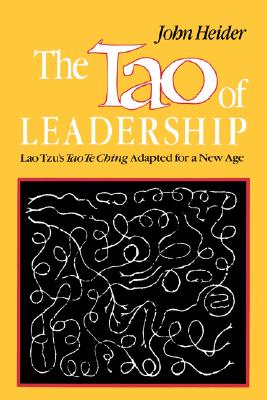
The Tao of Leadership Lao Tzu's Tao Te Ching Adapted for a New Age by John Heider


Find details here.

"Learn to lead in a nourishing manner."

"Thirteen people sit in a circle, but it is the climate or the spirit in the center of the circle, where nothing is happening that determines the nature of the group field. Learn to see emptiness. When you enter an empty house, can you feel the mood of the place? It is the same with a vase or a pot; learn to see the emptiness inside, which is the usefulness of it."

"When you are puzzled by what you see or hear, do not strive to figure things out. Stand back for a moment and become calm. When a person is calm, complex events appear simple."

"To know what is happening, push less, open out and be aware. See without staring. Listen quietly rather than listening hard. Use intuition and reflection rather than trying to figure things out."

"Being a midwife: The wise leader does not intervene unnecessarily. The leader's presence is felt, but often the group runs itself."

"Remember that you are facilitating another person's process. It is not your process. Do not intrude. Do not control. Do not force your own needs and insights into the foreground. If you do not trust a person's process, that person will not trust you."

"Facilitate what is happening rather than what you think out to be happening."

"If you must take charge and lead, lead so that the mother is helped, yet still free and in charge."

"Clarify conflicts."

"Most people lead busy lives, but the wise leader is quiet and reflective."

"When I let go of what I am, I become what I might be. When I let go of what I have, I receive what I need."

"When I feel most destroyed, I am about to grow."

"When I desire nothing, a great deal comes to me."

"No other natural outpouring goes on and on. It rains and then it stops. It thunders and then it stops."

"I can look at a person and see both principle and process in them. I can see how they work. I can see them actually working. That is the basis of my ability as a group leader."

"I also know the importance of staying flexible. Everything that grows is flexible."

"Let go in order to achieve."

"The fewer rules the better. Rules reduce freedom and responsibility. Enforcement of rules is coercive and manipulative, which diminishes spontaneity and absorbs group energy. The more coercive you are, the more resistant the group will become. Your manipulations will only breed evasions. Every law creates an outlaw. This is no way to run a group."

"When the leader practices silence, the group remains focused. When the leader does not impose rules, the group discovers is own goodness.

"Learn to trust what is happening. If there is silence, let it grow; something will emerge. If there is a storm, let it rage; it will resolve into calm."

"Is the group disconnected? You can't make it happy. Even if you could, your efforts might well deprive the group of a very creative struggle."

"If you are attached or criticized, react in a way that will shed light on the event. This is a matter of being centered and of knowing that an encounter is a dance and not a threat to your ego or existence. Tell the truth."

"The wise leader see things almost before they happen."

"The greatest martial arts are the gentlest. They allow an attacker the opportunity to fall down."

"It is far better to step back than to overstep yourself."

"Advance only where you encounter no resistance."

"If you make a point, do not cling to it. If you win, be gracious."

"The person who initiates the attack is off center and easily thrown. Even so, have respect for any attacker. Never surrender your compassion or use your skill to harm another needlessly."

"Harsh interventions are a warning that the leader may be uncentered or have an emotional attachment to whatever is happening. A special awareness is called for. Even if harsh interventions succeed brilliantly, there is no cause for celebration. There has been injury. Someone's process has been violated. Later on, the person who's process has been violated has may well become less open and more defended. There will be a deeper resistance and possibly even resentment. Making people do what you think they ought to do does not lend toward clarity and consciousness. While they may do what you tell them to do at the time, they will cringe inwardly, grow confused, and plot revenge. This is why your victory is actually a failure."

"That is the way of nature: to relax what is tense, to fill what is empty, to reduce what is overflowing."

"Water is fluid, soft, and yielding. But water will wear away a rock, which is rigid and cannot yield. As a rule, whatever is fluid, soft and yielding will overcome whatever is rigid and hard. The wise leader knows that yielding overcomes resistances and gentleness melts rigid defenses."

"Why is the ocean the greatest body of water? Because it lies below all the rivers and streams and is open to them all. What we call leadership consists mainly of knowing how to follow. The wise leader stays in the background and facilitates other people's process. The greatest things the leader does go largely unnoticed."

"The ability to be soft makes the leader a leader. This is another paradox: What is soft is strong."

"The wise leader is not collecting a string of successes. The leader is helping others to find their own success."

"The wise leader knows that the reward for doing the work arises naturally out of the work."

"Consider the lives of plants and trees: during their time of greatest growth, they are relatively tender and pliant. But when they are full grown or begin to die, they become tough and brittle. The tree which has grown up and become rigid is cut into lumber... Whatever is flexible and flowing will tend to grow. Whatever is rigid and blocked will atrophy and die." (151)

"It is not the leader's role to play judge and jury, to punish people for 'bad' behavior. In the first place, punishment does not effectively control behavior. But even if punishment did work, what leader would dare use fear as a teaching method? The wise leader knows that there are natural consequences for every act. The task is to shed light on these natural consequences, not to attack the behavior itself...[or] the leader will discover the instrument of justice cuts both ways. Punishing others is punishing work."

"If you don't trust the people, they will become untrustworthy."

Books someone told me about that I'd like to read, a running list:

  • A Pedagogy for Liberation: Dialogues on Transforming Education by Ira Shor
  • A Sense of Wonder by Rachel Carson
  • Arts for Change: Teaching Outside the Frame by Beverly Naidus
  • At the Same Time: Essays & Speeches by Susan Sontag
  • Book of Questions by Pablo Neruda
  • Connected: The Surprising Power of Our Social Networks and How They Shape Our Lives by Christakis & Fowler
  • Deep Play by Diane Ackerman
  • Dry Bones Rattling: Community Building to Revitalize American Democracy by Mark R. Warren
  • From Here to There: A Curious Collection from the Hand Drawn Map by Kris Harzinski
  • Good Mail Day: A Primer for Making Eye-Popping Postal Art by Jennie Hinchcliff
  • Habits of Goodness: Case Studies in the Social Curriculum by Ruth Sidney Charney
  • Hanging Out, Messing Around, and Geeking Out: Kids Living and Learning with New Media by Mizuko Ito
  • Happiness and Education by Nell Noddings
  • Hope in the Dark: The Untold History of People by Rebecca Solnit
  • How Animals Grieve by Barbara J King
  • How Children Succeed: Grit, Curiosity, and the Hidden Power of Character by Paul Tough
  • In Dialouge with Reggie Emilia: Listening, Researching and Learning by Carlina Rinaldi
  • John Dewey and the Philosophy and Practice of Hope by Stephen M. Fishman and Lucille McCarthy
  • Leadership and the New Science: Discovering Order in a Chaotic World by Margaret Wheatley
  • Learning to Trust: Transforming Difficult Elementary Classrooms Through Developmental Discipline by Marilyn Watson
  • Leavings: Poems by Wendell Berry
  • Lists: To-dos, Illustrated Inventories, Collected Thoughts, and Other Artists’ Enumerations from the Smithsonian's Archives of American Art by Liza Kirwin
  • Living the Questions: Essays Inspired by the Work and Life of Parker J. Palmer by Sam M. Intrator
  • Magic Moments: Collaborations Between Artists And Young People by Anna Harding
  • One Hundred Demons by Lynda Barry
  • One Line a Day Journal
  • Out of Our Minds: Learning to be Creative by Ken Robinson
  • Picture This: The Near-sighted Monkey Book by Lynda Barry
  • Presence: Human Purpose and the Field of the Future by Peter Senge & others
  • Quiet: The Power of Introverts in a World That Can't Stop Talking by Susan Cain
  • Storycatcher: Making Sense of Our Lives through the Power and Practice of Story By Christina Baldwin
  • Synchronicity: The Inner Path of Leadership by Joseph Jaworski
  • Tender Hooks: Poems by Beth Ann Fennelly
  • The Call of Stories: Teaching and the Moral Imagination by Robert Coles
  • The Diary of Frida Kahlo: An Intimate Self-Portrait by Frida Kahlo
  • The Englishman Who Posted Himself and Other Curious Objects by John Tingey
  • The Everyday Work of Art by Eric Booth
  • The Fire Starter Sessions: A Soulful + Practical Guide to Creating Success on Your Own Terms by Danielle LaPorte
  • The Gift: Imagination and the Erotic Life of Property by Lewis Hyde
  • The Great Good Place by Ray Oldenburg
  • The Marvelous Museum: Orphans, Curiosities & Treasures A Mark Dion Project
  • The Places That Scare You: A Guide to Fearlessness in Difficult Times By Pema Chodron
  • The Power of Community-Centered Education: Teaching as a Craft of Place by Michael Umphrey
  • The Power of Their Ideas: Lessons for American from a Small School in Harlem by Deborah Meier
  • The Search to Belong: Rethinking Intimacy, Community, and Small Groups by Joseph R. Myers
  • The Selected Works of T. S. Spivet by Reif Larsen
  • The Tao of Personal Leadership by Diane Dreher
  • The Three Marriages: Reimagining Work, Self and Relationship by David Whyte
  • The Truly Alive Child by Simon Paul Harrison
  • This Is Water: Some Thoughts, Delivered on a Significant Occasion, about Living a Compassionate Life by David Foster Wallace
  • Walking on Water by Derrick Jensen
  • We Are All Explorers, Learning and Teaching with Reggio Principles in Urban Settings by Karen Haigh
  • Willing to Learn: Passages of Personal Discovery by Mary Catherine Bateson
  • Women Who Run with the Wolves by Clarissa Pinkola Estés
  • Women's Ways Of Knowing: The Development Of Self, Voice, And Mind by Mary Belenky, Blythe Clinchy, Nancy Goldberger , Jill Tarule